



Please log in to consult the article in its entirety. If you are a member (student of staff) of a subscribing institution (see List), you should be able to access the LE on campus directly (without the need to log in), and off-campus either via the institutional log in we offer, or via your institution's remote access facilities, or by creating a personal user account with your institutional email address. If you are not a member of a subscribing institution, you will need to purchase a personal subscription. For more information on how to subscribe as an individual user, please see under Individual Subcriptions.
2041 words
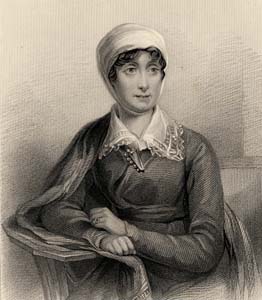
Citation: Duquette, Natasha Aleksiuk. "Joanna Baillie". The Literary Encyclopedia. First published 12 November 2001 [https://www.litencyc.com/php/speople.php?rec=true&UID=219, accessed 30 September 2026.]
